
Precharge pulsation dampeners are specialized devices designed to smooth out pressure fluctuations and pulsations in fluid systems by using a pre-charged gas chamber. These dampeners are commonly installed in systems with reciprocating pumps, such as diaphragm, plunger, and piston pumps, where pulsations are an inherent part of the pump’s operation. The precharged gas (typically nitrogen) compresses in response to liquid pressure changes, absorbing the energy from each pressure pulse and providing a stable, even flow in the system.
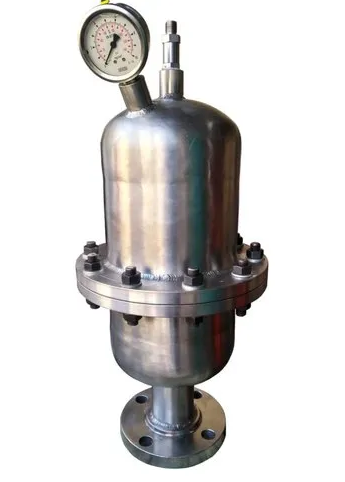
Key Components:
- Gas Chamber: Precharged with nitrogen to a specific pressure, this chamber absorbs and compresses to cushion the impact of pressure surges.
- Bladder or Diaphragm: Separates the gas from the fluid and flexes in response to pressure changes, allowing for controlled energy absorption.
- Housing: The outer shell, often made from materials like stainless steel, PVC, or other durable metals/plastics depending on the fluid and operating environment.
- Precharge Valve: Allows for the gas precharge to be set or adjusted, based on the system’s requirements.
- Fluid Inlet/Outlet: Connects the dampener to the fluid system, allowing the device to absorb pulsations directly from the pump’s discharge line.
How It Works:
- Initial Precharge: Before operation, the gas chamber is precharged with nitrogen to a pressure that’s usually set at 70-80% of the system’s normal operating pressure.
- Pulsation Absorption: As the pump operates, it generates pressure pulses in the fluid. Each pulse pushes against the bladder or diaphragm, compressing the precharged gas in the gas chamber.
- Energy Absorption and Release: The compressed gas absorbs the energy of each pulse, reducing the peak pressure. When the system pressure drops, the gas expands, pushing the diaphragm back and returning energy to maintain a more consistent flow.
- Continuous Pulsation Dampening: This cycle of compression and expansion happens with every pump stroke, allowing the dampener to continuously smooth out pulsations.
Importance of Precharging:
The precharge pressure is crucial to a pulsation dampener’s effectiveness. Too low a precharge may cause the bladder or diaphragm to rupture due to over-compression, while too high a precharge can reduce the dampener’s effectiveness or cause damage from insufficient cushioning. Proper precharging optimizes the dampener’s performance, ensuring the best absorption of pressure surges.
Benefits:
- Enhanced System Stability: Precharged pulsation dampeners provide consistent flow and pressure, reducing the likelihood of pressure spikes.
- Protection of System Components: Prevents damage to piping, valves, fittings, and sensitive components that might be affected by constant pulsations or pressure surges.
- Increased Pump Life: Smooths the load on pumps, reducing wear and extending operational life.
- Noise Reduction: Mitigates noise from pressure pulses, resulting in quieter operation, which is especially beneficial in industrial and laboratory environments.
- Energy Efficiency: A consistent flow reduces energy consumption, as less energy is wasted on pressure surges and pulsations.
Applications:
- Water and Wastewater Treatment: Used to maintain steady chemical dosing and avoid damage to water handling systems.
- Chemical Processing: Provides stable flow when transferring chemicals, which is crucial in applications where flow consistency impacts product quality or safety.
- Oil and Gas: Protects sensitive equipment and pipelines in high-pressure environments, reducing wear from fluctuating pressures.
- Pharmaceutical and Food Processing: Ensures smooth flow for precise dosing and ingredient handling, especially in sanitary or clean applications.
- Agriculture and Fertilizer Systems: Maintains stable dosing of fertilizers and nutrients in irrigation and fertigation systems, promoting consistent growth conditions.
Selecting the Right Precharge Pulsation Dampener:
- System Pressure: Choose a dampener with a precharge pressure rating suitable for your system’s operating pressure.
- Pulsation Characteristics: Determine the pump type, pulsation frequency, and amplitude to select the proper dampener size and precharge setting.
- Fluid Compatibility: Select a dampener with materials that are compatible with the fluid being pumped.
- Temperature Range: Ensure the dampener materials and precharge gas are suitable for the temperature conditions in your system.
Summary:
Precharge pulsation dampeners are essential for managing pressure surges and flow inconsistencies in systems with reciprocating pumps. By using a precharged gas chamber, these dampeners absorb and release energy from pulsations, protecting system components, extending equipment life, and ensuring stable operation. With applications spanning multiple industries, precharge pulsation dampeners play a critical role in enhancing system efficiency, reliability, and safety.